Math is full of craziness. Square numbers are no different.
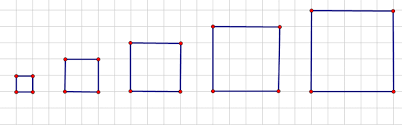
For those who might not remember, a square number is merely a whole number that is the product of two integers. 0 is the smallest square number (0 x 0), but the ones after it are 1, 4, 9, 16, 25, 36, 49, 64, 81, and 100.
Are there negative square numbers? No. Suppose the number “a” is negative. a x a is a negative times negative which is just positive. The only time a square number is not positive is if it is 0. When considering imaginary numbers, the idea becomes far more complex (pun intended), which is why they are not considered in the discussion of square numbers.
I’d like to present the first 100 positive square numbers and take a look at some oddities with them:
| 1 | 4 | 9 | 16 | 25 | 36 | 49 | 64 | 81 | 100 |
| 121 | 144 | 169 | 196 | 225 | 256 | 289 | 324 | 361 | 400 |
| 441 | 484 | 529 | 576 | 625 | 676 | 729 | 784 | 841 | 900 |
| 961 | 1024 | 1089 | 1156 | 1225 | 1296 | 1369 | 1444 | 1521 | 1600 |
| 1681 | 1764 | 1849 | 1936 | 2025 | 2116 | 2209 | 2304 | 2401 | 2500 |
| 2601 | 2704 | 2809 | 2916 | 3025 | 3136 | 3249 | 3364 | 3481 | 3600 |
| 3741 | 3844 | 3969 | 4076 | 4225 | 4356 | 4489 | 4624 | 4761 | 4900 |
| 5041 | 5184 | 5328 | 5476 | 5625 | 5776 | 5929 | 6084 | 6241 | 6400 |
| 6561 | 6724 | 6889 | 7056 | 7225 | 7396 | 7569 | 7744 | 7921 | 8100 |
| 8281 | 8464 | 8649 | 8836 | 9025 | 9216 | 9409 | 9604 | 9801 | 10000 |
Notice anything?
I think one of the most interesting aspects is the difference between consecutive squares. Notice how the difference is always odd, and that it grows progressively: between 1 and 4 is a difference 3, then 5 between 4 and 9, 7 between 9 and 16, etc. But how on earth do you prove this? Well let’s assume we have n and n+1. Their squares are n2 and n2+2n+1. Their difference is just 2n+1, which is guaranteed to be odd.

This aspect can be used to show how 242 (576) and 262 (676) have a mere difference of 100: the difference between 576 and 625 is 49, while the difference between 625 and 676 is 51, and 49 + 51 = 100.
Anyhow, here’s one other thing you might have noticed: the column under 25 all “end” in 25. In fact, every square of a number whose ones digit is 5 will have a ones digit of 5 and a tens digit of 2 (effectively “ending” in 25). I might as well bestow y’all “trick” often bestowed to those curious: consider 652. Examining the tens digit, we have a 6. If we do 6 x 7, we have 42. Add a 25 to the end. BOOM! 652 = 4225. What about 352? Well 3 x 4 = 12, so 352 = 1225.
How could we prove this, well let us represent any number that “ends” with a 5 as 10n+5, where n is a natural number (although this also works with n = 0 even though 0 is not natural, but this is considered the “trivial” case). Why this expression? Well multiplying a number by 10 will have the ones digit 0. For example, 35 = 3 x 10 + 5. So if we square “10n+5”, we have 100n2+100n+25. We have our 25, now let’s look at the other expression. If we factor out a 100, we have n2+n, which can be further factored to n(n+1). Thus, we have 100 x n(n+1). The 100 acts to ensure two 0’s before we add the 25, while the n(n+1) models the action we saw with 3 x 4 from computing 352. This shows how the “trick” works.
Here’s some other interesting things which I leave you, the reader, to prove for yourself. First, notice the squares of numbers in the 40s (starting with 412, or 1681). Notice how those squares end as you go up: 81, 64, 49, etc. Seem familiar? What about the squares for numbers in the 90s? Or maybe the ones for the 50s? Curious, isn’t it? Or perhaps the pattern overall with how they end? Again, these I leave to you to examine and maybe prove.
I think one of the most interesting “tricks” involving squares of two-digit numbers is how to calculate them all without using brute force. For example, let us compute 642. Taking the ones digit, let us add and subtract it from 64. 64 – 4 = 60, while 64 + 4 = 68. The product of 68 and 60 is 4080, and when we add 42 (which is 16), we have 4096. Let us now try 832. 83 – 3 = 80, while 83 + 3 = 86. 86 x 80 = 6880, then 6880 + 9 = 6889.
How might this one work? Well let us consider a two digit number to be represented as “10a + b”, where a and b are any digit. The square is 100a2+20ab+b2. So there we already have the b2 that we need (with 64 it was 4 while with 83 it was 3). Well recall that we added and subtracted b (for 64 we added and subtracted 4), so what we were really doing was 10a + b + b, which simplifies to 10a + 2b, and 10a + b – b, which is just 10a. If we multiply the two quantities (10a + 2b and 10a), we have 100a2 + 20ab, which is the other part of the square.
There are many other weird properties with squares, but I’d like for you to discover them all for yourself. Although I would like to preview the next post that happens to involve a square number, and even then it doesn’t even have to do with the fact that it is square. There is an interesting number trick involving three digit numbers where you flip it and then subtract the greater number from the smaller one, then flip that difference and add. You’ll always arrive at this number, and I’ll talk about it more in depth in the next post.
 Math Toolbox